
Share Bias Tilford Sr's obituary with others.
Invite friends and family to read the obituary and add memories.
Stay updated
We'll notify you when service details or new memories are added.
You're now following this obituary
We'll email you when there are updates.
Select your format and elements to print

IN LOVING MEMORY OF Bias Tilford Sr
Bias Tilford
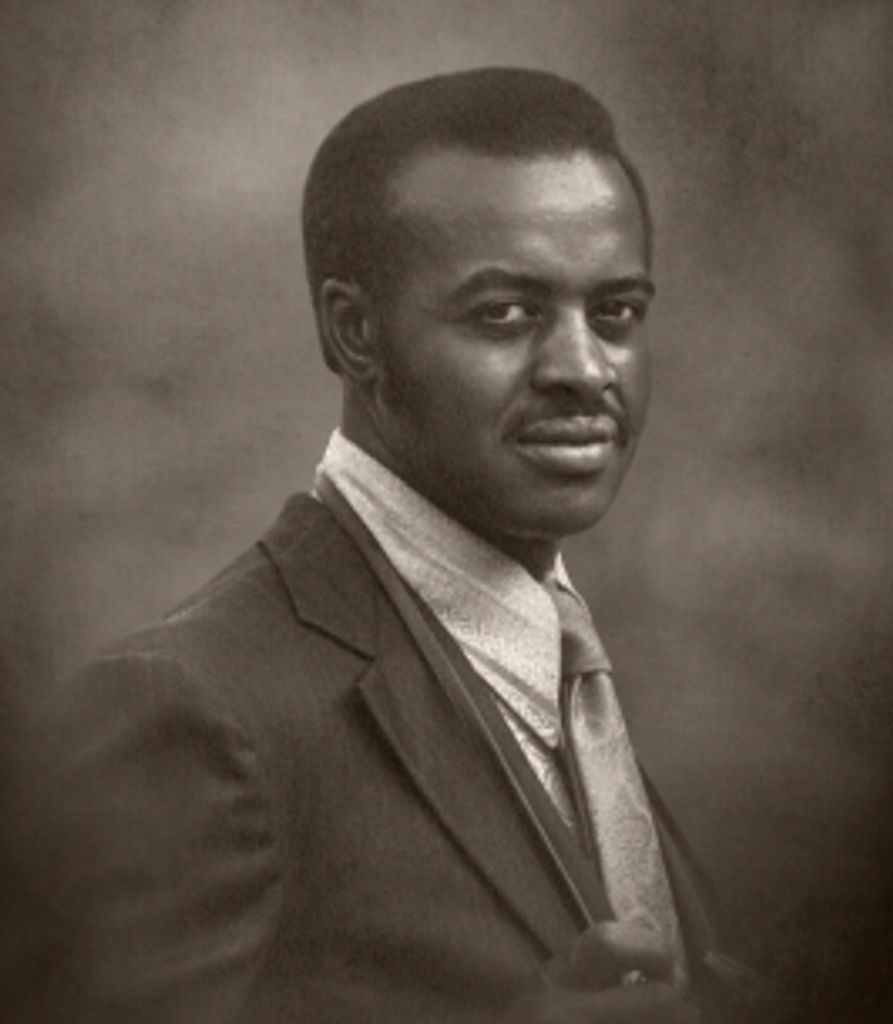
Sr
Nov 13, 1933 — Feb 12, 2026
Bias Tilford Sr's Obituary
Listen to Obituary
Bias Sidney Tilford Sr., of Georgetown, Kentucky, passed away February 12 at the age of 92, leaving behind a legacy defined by faith, service, storytelling, mentorship, and an unwavering belief that opportunity should exist for all.
Bias passed at home, surrounded by family, in the historic Charles Steele homeplace in Georgetown's Boston community, a home passed through his father's family line and one that holds generations of Black history within its walls. It was the place where he built a life, nurtured generations, and paved a historic path forward. Many who loved him believe that when Bias reached the gates of heaven, God smiled, welcoming home a faithful servant and a brilliant soldier to the human race.
That Bias passed during Black History Month, in the very town where he organized Georgetown's first Martin Luther King Jr. march, felt to many like sacred symmetry. The march he helped establish continues to this day, a living reminder that memory, when honored, becomes movement.
Born in 1933, Bias Tilford was raised in Georgetown's historic Boston community and came of age during segregation, when opportunity for Black Kentuckians was constrained not by ability, but by access. He was the son of Bias Tilford Sr. and Ernestine Brock Tilford-Harris, whose example of commitment, hard work, pride, and faith shaped his life.
Equally formative was his aunt, Sallie Ree Tilford, an educator who taught during segregation and desegregation in Scott County and later in Washington, D.C. At a time when education itself was an act of courage, her life demonstrated discipline, purpose, and resolve, an example that helped inspire Bias's lifelong commitment to expanding opportunity for others.
Bias was a proud graduate of the historic Ed Davis High School. Though he did not attend college, education never stopped for him. He read constantly, studied history deeply, and carried himself with the presence of a professor. Many believed that if heaven grants honorary degrees, Bias surely received one.
Bias's fascination with images began in childhood. As a young boy, he spent hours observing shifting clouds, watching how they reshaped themselves into recognizable earthly forms. That early habit of observation laid the foundation for a life devoted to visual storytelling.
He became a pioneer in audiovisual technology, photography, and media at a time when the work demanded skill, trust, and constant movement. Bias worked concurrently for IBM and WLEX-TV, performing true double duty during an era when such roles required exceptional discipline and mastery.
With IBM, Bias served as an audiovisual technician who traveled extensively across the United States photographing, documenting, and producing slide and film presentations, long before email or digital transmission existed. Stories had to be carried by hand and by lens, shaping how people, ideas, and progress were seen nationwide.
At the same time, he was hired by the original ownership of WLEX-TV as a news cameraman. Working alongside sports director Billy Thompson, Bias was part of the production team for The Adolph Rupp Sunday Show, the widely watched program featuring legendary University of Kentucky basketball coach Adolph Rupp. Through this work, he helped preserve a defining era of Kentucky basketball and sports history.
Those Sundays also became family memories. His children often tagged along, quietly watching their father work, learning without realizing it how discipline, excellence, and storytelling mattered.
The Tilford family was repeatedly summoned by the University of Kentucky Athletic Department to host recruits during the late Adolph Rupp teams and early Joe B. Hall era. Bias and his wife, Barbara Tilford, opened their home, particularly to early Black basketball recruits, offering hospitality, guidance, and a sense of belonging. That same generosity was extended at times to UK football recruits as well. The Tilford home became a place of trust when such spaces were rare.
Bias made a lasting contribution to the Black press as a photographer for the Louisville Defender, working out of its Bluegrass Lexington office. His work helped preserve African American history and community voices during a period when documentation itself was essential. His legacy is now permanently recorded in a recently published book chronicling the history of the Louisville Defender.
He was also a trusted political advisor and photographer to Bill Kenton, Speaker of the Kentucky House of Representatives, providing counsel, strategy, and visual documentation during a significant period in Kentucky political history. A proud Kentucky Democrat, Bias followed politics not as sport, but as responsibility.
His influence extended into arts and culture as well. Bias was on the ground floor of the Cincinnati Jazz Festival, working closely with the Santangelo family as media field coordinator. He oversaw on-site operations, organized advertising and promotional efforts, and managed media logistics, helping establish the foundation of a nationally recognized festival.
A tireless advocate for economic opportunity, Bias helped expand minority contract supplier opportunities through Johnson Controls and later served on the Minority Suppliers Advisory Committee for Toyota. He was also part of 7E Enterprises, a Black-led venture capital investment group focused on supporting minority entrepreneurs and expanding access to capital.
Deeply rooted in Georgetown, Bias served on the Georgetown Planning Commission, the Georgetown City Council alongside Barbara, and was an active member of the Georgetown Men's Business Group. He was instrumental in the planning and delivery of the Georgetown Pavilion, believing idle hands were the devil's playground and that children needed safe places to gather, play, and grow. His legacy remains etched on the very walls of the Pavilion.
Bias's commitment to civil rights and journalism is also recognized on the Wall of Fame at the Lyric Theatre in Lexington. Together, Bias and Barbara Tilford were inducted into the NAACP of Kentucky Hall of Fame.
Even in his later years, Bias remained fully engaged, grounded in the reality of older people, attentive to dignity, memory, and voice. He welcomed debate, understood the value of disagreement, and believed it took all kinds of kinds working together to ensure opportunity for all.
A devoted member of First Baptist Church of Georgetown, Bias raised his family in faith and lived it through example rather than words. He served as a father figure to many who never had the guidance God intended, offering discipline, encouragement, and love rooted in responsibility and grace.
At family gatherings, Bias was the heart of the room, encouraging grandchildren to recite poems, perform songs, and share routines, creating traditions filled with laughter, confidence, and joy.
Bias carried forward a legacy rooted in extraordinary courage. He was the great-great-great-great grandson of Free Wyatt Tilford, a man who refused to be enslaved. That same spirit defined Bias's life. He never settled, and he never allowed others to settle for less than they deserved. He believed in justice and opportunity for all.
Above all, Bias was a devoted husband and father. He and Barbara Tilford were the parents of three children: Barry Tilford, Bias Tilford Jr., and Bradley Tilford. Bias Jr. preceded him in death three years ago. Bias leaves behind his beloved wife, Barbara Tilford, his sons Barry Tilford and Bradley Tilford, and a host of grandchildren and great-grandchildren.
His legacy continues through generations. One grandson serves as a podcast producer for Governor Andy Beshear, while another, Brelín Tilford, carries forward the family's media legacy through national sports projects, including work involving Deion Sanders in KFC commercials and collaborations with Fortune 500 companies.
Bias's family and influence extend far beyond Georgetown and the Bluegrass, reaching across Kentucky, throughout the nation, and as far as California, New York, Chicago, and London, England. His leaves are scattered across the world.
With his passing, the world lost one of its most notable Black custodians of civic and personal integrity, bar none.
Funeral services will be 2 PM Friday, February 20, 2026 at First Baptist Church. Burial will follow at the Maple Grove Cemetery, Georgetown. Visitation will be 12 PM till service time.
Bias passed at home, surrounded by family, in the historic Charles Steele homeplace in Georgetown's Boston community, a home passed through his father's family line and one that holds generations of Black history within its walls. It was the place where he built a life, nurtured generations, and paved a historic path forward. Many who loved him believe that when Bias reached the gates of heaven, God smiled, welcoming home a faithful servant and a brilliant soldier to the human race.
That Bias passed during Black History Month, in the very town where he organized Georgetown's first Martin Luther King Jr. march, felt to many like sacred symmetry. The march he helped establish continues to this day, a living reminder that memory, when honored, becomes movement.
Born in 1933, Bias Tilford was raised in Georgetown's historic Boston community and came of age during segregation, when opportunity for Black Kentuckians was constrained not by ability, but by access. He was the son of Bias Tilford Sr. and Ernestine Brock Tilford-Harris, whose example of commitment, hard work, pride, and faith shaped his life.
Equally formative was his aunt, Sallie Ree Tilford, an educator who taught during segregation and desegregation in Scott County and later in Washington, D.C. At a time when education itself was an act of courage, her life demonstrated discipline, purpose, and resolve, an example that helped inspire Bias's lifelong commitment to expanding opportunity for others.
Bias was a proud graduate of the historic Ed Davis High School. Though he did not attend college, education never stopped for him. He read constantly, studied history deeply, and carried himself with the presence of a professor. Many believed that if heaven grants honorary degrees, Bias surely received one.
Bias's fascination with images began in childhood. As a young boy, he spent hours observing shifting clouds, watching how they reshaped themselves into recognizable earthly forms. That early habit of observation laid the foundation for a life devoted to visual storytelling.
He became a pioneer in audiovisual technology, photography, and media at a time when the work demanded skill, trust, and constant movement. Bias worked concurrently for IBM and WLEX-TV, performing true double duty during an era when such roles required exceptional discipline and mastery.
With IBM, Bias served as an audiovisual technician who traveled extensively across the United States photographing, documenting, and producing slide and film presentations, long before email or digital transmission existed. Stories had to be carried by hand and by lens, shaping how people, ideas, and progress were seen nationwide.
At the same time, he was hired by the original ownership of WLEX-TV as a news cameraman. Working alongside sports director Billy Thompson, Bias was part of the production team for The Adolph Rupp Sunday Show, the widely watched program featuring legendary University of Kentucky basketball coach Adolph Rupp. Through this work, he helped preserve a defining era of Kentucky basketball and sports history.
Those Sundays also became family memories. His children often tagged along, quietly watching their father work, learning without realizing it how discipline, excellence, and storytelling mattered.
The Tilford family was repeatedly summoned by the University of Kentucky Athletic Department to host recruits during the late Adolph Rupp teams and early Joe B. Hall era. Bias and his wife, Barbara Tilford, opened their home, particularly to early Black basketball recruits, offering hospitality, guidance, and a sense of belonging. That same generosity was extended at times to UK football recruits as well. The Tilford home became a place of trust when such spaces were rare.
Bias made a lasting contribution to the Black press as a photographer for the Louisville Defender, working out of its Bluegrass Lexington office. His work helped preserve African American history and community voices during a period when documentation itself was essential. His legacy is now permanently recorded in a recently published book chronicling the history of the Louisville Defender.
He was also a trusted political advisor and photographer to Bill Kenton, Speaker of the Kentucky House of Representatives, providing counsel, strategy, and visual documentation during a significant period in Kentucky political history. A proud Kentucky Democrat, Bias followed politics not as sport, but as responsibility.
His influence extended into arts and culture as well. Bias was on the ground floor of the Cincinnati Jazz Festival, working closely with the Santangelo family as media field coordinator. He oversaw on-site operations, organized advertising and promotional efforts, and managed media logistics, helping establish the foundation of a nationally recognized festival.
A tireless advocate for economic opportunity, Bias helped expand minority contract supplier opportunities through Johnson Controls and later served on the Minority Suppliers Advisory Committee for Toyota. He was also part of 7E Enterprises, a Black-led venture capital investment group focused on supporting minority entrepreneurs and expanding access to capital.
Deeply rooted in Georgetown, Bias served on the Georgetown Planning Commission, the Georgetown City Council alongside Barbara, and was an active member of the Georgetown Men's Business Group. He was instrumental in the planning and delivery of the Georgetown Pavilion, believing idle hands were the devil's playground and that children needed safe places to gather, play, and grow. His legacy remains etched on the very walls of the Pavilion.
Bias's commitment to civil rights and journalism is also recognized on the Wall of Fame at the Lyric Theatre in Lexington. Together, Bias and Barbara Tilford were inducted into the NAACP of Kentucky Hall of Fame.
Even in his later years, Bias remained fully engaged, grounded in the reality of older people, attentive to dignity, memory, and voice. He welcomed debate, understood the value of disagreement, and believed it took all kinds of kinds working together to ensure opportunity for all.
A devoted member of First Baptist Church of Georgetown, Bias raised his family in faith and lived it through example rather than words. He served as a father figure to many who never had the guidance God intended, offering discipline, encouragement, and love rooted in responsibility and grace.
At family gatherings, Bias was the heart of the room, encouraging grandchildren to recite poems, perform songs, and share routines, creating traditions filled with laughter, confidence, and joy.
Bias carried forward a legacy rooted in extraordinary courage. He was the great-great-great-great grandson of Free Wyatt Tilford, a man who refused to be enslaved. That same spirit defined Bias's life. He never settled, and he never allowed others to settle for less than they deserved. He believed in justice and opportunity for all.
Above all, Bias was a devoted husband and father. He and Barbara Tilford were the parents of three children: Barry Tilford, Bias Tilford Jr., and Bradley Tilford. Bias Jr. preceded him in death three years ago. Bias leaves behind his beloved wife, Barbara Tilford, his sons Barry Tilford and Bradley Tilford, and a host of grandchildren and great-grandchildren.
His legacy continues through generations. One grandson serves as a podcast producer for Governor Andy Beshear, while another, Brelín Tilford, carries forward the family's media legacy through national sports projects, including work involving Deion Sanders in KFC commercials and collaborations with Fortune 500 companies.
Bias's family and influence extend far beyond Georgetown and the Bluegrass, reaching across Kentucky, throughout the nation, and as far as California, New York, Chicago, and London, England. His leaves are scattered across the world.
With his passing, the world lost one of its most notable Black custodians of civic and personal integrity, bar none.
Funeral services will be 2 PM Friday, February 20, 2026 at First Baptist Church. Burial will follow at the Maple Grove Cemetery, Georgetown. Visitation will be 12 PM till service time.
To send flowers with our preferred florist or plant a memorial tree, please visit our flower store.
Funeral Services for Bias Tilford Sr
Visitation

February
20
Friday
First Baptist Church
12:00 - 2:00 pm
Service
February
20
Friday
First Baptist Church
Starts at 2:00 pm
Bias Tilford Sr's Guestbook
This site is protected by reCAPTCHA and the
Google Privacy Policy and Terms of Service apply.
Service map data © OpenStreetMap contributors